
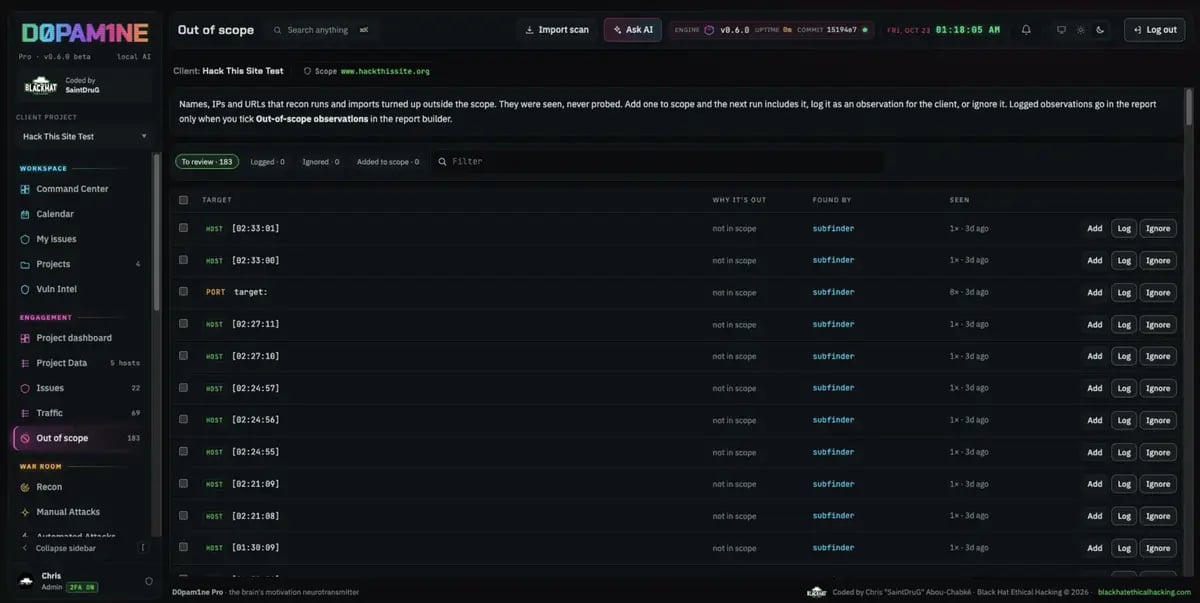
The Out of scope page keeps a clean record of what was excluded
Scope rule types
A path can end with
* for an explicit prefix match (/api* matches /api, /api-v2, /api/x).
Path-limited hosts
A rule with a path or port is limited: the host is reachable for the web stages (its in-scope URLs are probed, crawled and screenshotted) but is never port scanned, and nothing outside the allowed path is ever requested. A crawler is constrained to the allowed URL patterns. This lets you test one application on a shared host without touching the rest.How recon enforces it
- Brute-force and permutation candidates under excluded names are never resolved.
- Excluded IPs are subtracted from ranges before a mass port sweep.
- A discovered name is followed from an IP only when every address it resolves to is an in-scope IP.
- Wordlists are trimmed so excluded paths are never requested, and no tool follows a redirect out of scope.
- An out-of-scope rule with a path removes only the URLs under that path.